How Hot Fiesta Are Mined, Processed, and Prepared for the Jewelry Market
Gemstones have fascinated humans for thousands of years. Their beauty, rarity, and brilliance make them valuable not only as decorative items but also as symbols of wealth, culture, and artistry. Among the many gemstones used in jewelry, fire opals—sometimes referred to in trade contexts as “Hot Fiesta” stones because of their bright, fiery colors—stand out for their vibrant orange, red, and golden hues. These gemstones resemble glowing embers, capturing the warmth and intensity of fire in solid form.
Before a fire opal becomes a polished gemstone set into a ring, necklace, or bracelet, it goes through a long journey that involves mining, careful processing, skilled cutting, and detailed preparation for the jewelry market. Each step requires expertise and precision to preserve the stone’s beauty and value.
Understanding Fire Opals
Fire opals are a unique variety of opal known for their bright warm colors. Unlike traditional opals that display multiple rainbow colors through a phenomenon known as “play-of-color,” fire opals are valued mainly for their vivid body color, which can range from yellow and orange to deep red.
These gemstones are primarily found in volcanic regions. The minerals that form opals develop when silica-rich water seeps into cracks and cavities in volcanic rock. Over thousands or even millions of years, the water evaporates and leaves behind deposits of silica that slowly form opal.
The most famous source of fire opals is Mexico, particularly the state of Querétaro. Mexican fire opals have been admired since the time of ancient civilizations such as the Aztecs and Mayans, who believed these stones contained the energy of the sun.
Today, fire opals are used in a wide variety of jewelry pieces because of their warm glow and striking appearance.
The Mining Process
The journey of a fire opal begins deep within the earth. Mining these gemstones requires both geological knowledge and careful extraction techniques.
Most fire opal deposits are located in volcanic rock formations. Miners search for areas where silica-rich fluids once filled cracks in the rock. These cavities can contain opal deposits that formed over long periods.
Mining operations can vary in size. Some are small, family-run operations using basic tools, while others are larger commercial mining projects with advanced equipment.
In many traditional mining areas, workers dig tunnels or open pits to reach the opal-bearing rock layers. Once the rock is exposed, miners carefully break it apart to search for visible opal veins or nodules.
Because opals are relatively fragile compared to many other gemstones, miners must handle the rough stones carefully. A strong blow from a tool can easily crack or damage the gemstone, reducing its value.
After extraction, the rough stones are collected and sorted for further evaluation.
Sorting and Initial Evaluation
Once the raw fire opals are removed from the earth, the next step is sorting. At this stage, miners or gem traders examine each stone to determine its quality and potential value.
Sorting involves evaluating several factors, including color intensity, clarity, size, and the presence of cracks or inclusions. Stones with strong, vibrant colors—especially deep orange or red—are usually the most valuable.
Gemstone buyers and dealers often examine the stones under bright light to better see their natural color and transparency. Fire opals can range from transparent to translucent or even opaque.
At this stage, many rough stones are also separated into categories based on their potential use. High-quality stones may be reserved for fine jewelry, while lower-grade material might be used for decorative pieces, carvings, or collectors’ specimens.
This careful evaluation helps determine how each stone will be processed.
Cutting and Shaping the Gemstone
One of the most important steps in preparing fire opals for jewelry is the cutting process. Skilled gem cutters, known as lapidaries, transform rough stones into polished gems that display their best color and brilliance.
The first step in cutting is studying the rough stone carefully. A lapidary examines the shape, internal structure, and color distribution to determine the best way to cut the gem.
Fire opals are often shaped into cabochons, which are smooth, rounded stones with a flat base and domed top. This cut highlights the stone’s natural color and glow.
However, transparent fire opals may also be faceted like traditional gemstones. Faceting involves cutting multiple small flat surfaces on the stone to enhance its brilliance and reflect light.
The cutting process requires specialized equipment such as diamond saws, grinding wheels, and polishing tools. Because opals contain water within their structure, cutters must work slowly and carefully to prevent cracking or overheating the stone.
A single gemstone may take hours or even days to cut and polish properly.
Polishing for Maximum Brilliance
After the gemstone has been shaped, it moves to the polishing stage. Polishing is what gives the stone its final shine and smooth surface.
Lapidaries use fine abrasive materials to gently polish the surface of the gemstone. This step removes tiny scratches left by earlier cutting stages and reveals the full beauty of the stone.
For fire opals, polishing is particularly important because it enhances the stone’s warm glow and clarity. A well-polished fire opal can appear almost luminous, with light passing through the stone and reflecting its rich color.
The goal of polishing is not only to improve the stone’s appearance but also to make it suitable for jewelry settings.
Quality Grading and Certification
Once the gemstones are cut and polished, they are evaluated again. This stage involves grading the stone based on several factors that determine its market value.
Gemstone grading typically considers color, transparency, size, shape, and overall craftsmanship. Fire opals with vivid orange or red colors and high clarity are often the most desirable.
Some high-quality gemstones may also be sent to gemological laboratories for certification. These laboratories analyze the gemstone to confirm its authenticity and provide detailed reports about its characteristics.
Certification can increase buyer confidence, especially for expensive stones intended for luxury jewelry.
Preparing Stones for Jewelry Designers
After grading, the gemstones are ready to enter the jewelry supply chain. At this stage, gem dealers sell the stones to jewelry manufacturers, designers, or retailers.
Jewelry designers select stones based on their color, shape, and size to match their design concepts. For example, a designer creating a statement ring might choose a large, bright fire opal as the centerpiece.
Smaller stones may be used in earrings, pendants, or bracelets. Designers often pair fire opals with precious metals such as gold or platinum because these metals complement the warm color of the gemstone.
The stone is then carefully set into the jewelry piece using techniques such as prong settings, bezel settings, or custom designs that protect the stone while displaying its beauty.
The Role of Craftsmanship in Final Jewelry Pieces
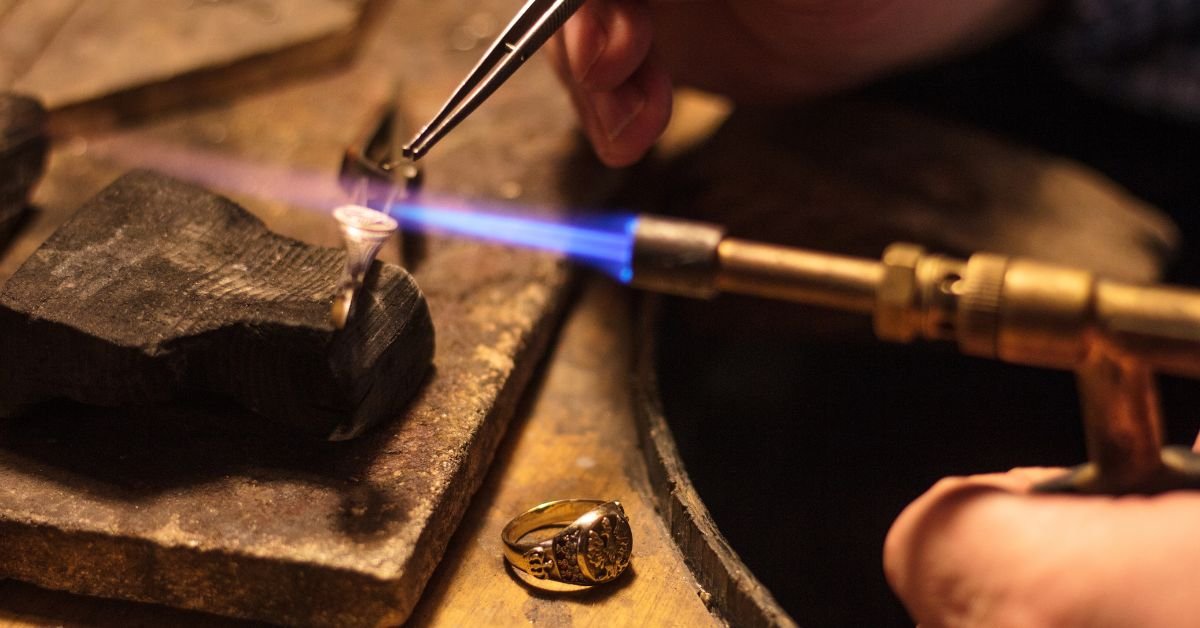
The final stage of the process involves turning the gemstone into a finished piece of jewelry. Skilled jewelers carefully mount the gemstone into its metal setting and polish the entire piece.
This stage requires precision because opals are softer than many other gemstones and can be damaged by excessive pressure. Jewelers must ensure the stone is secure while avoiding stress that could cause cracks.
Once the setting is complete, the jewelry piece undergoes final inspection and polishing. At this point, the gemstone that once existed as rough mineral inside volcanic rock has been transformed into a beautiful accessory ready for the market.
The Journey from Earth to Jewelry Store
The journey of a fire opal—from formation deep underground to its place in a jewelry display—is long and complex. It involves the work of miners, gem cutters, traders, designers, and jewelers, each contributing their expertise to bring out the best in the gemstone.
Every finished piece of fire opal jewelry represents not only natural geological processes that took millions of years but also the craftsmanship and skill of the people who handled the stone along the way.
Conclusion
Fire opals, sometimes referred to as “hot fiesta” gemstones because of their fiery appearance, are among the most striking stones used in modern jewelry. Their journey from raw mineral to polished gemstone is a fascinating process that involves mining, sorting, cutting, polishing, and finally setting into jewelry designs.
Each stage requires specialized knowledge and careful handling to preserve the beauty and value of the stone. By the time a fire opal appears in a ring or necklace, it has already traveled through many hands and undergone detailed craftsmanship.
Understanding this process helps people appreciate the effort and artistry behind every gemstone. What may look like a simple piece of jewelry actually represents a remarkable transformation—from natural volcanic mineral to a glowing symbol of beauty and elegance.